
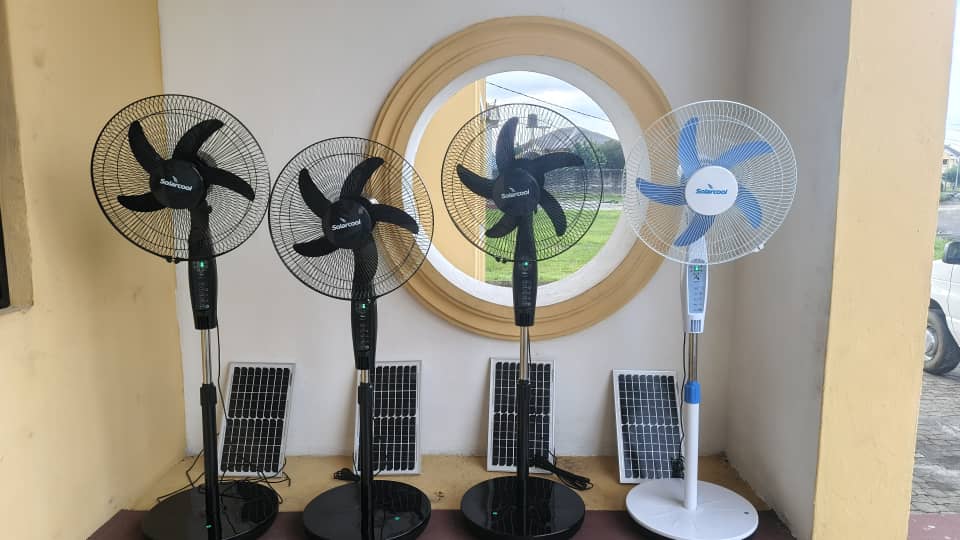
For many households and businesses in Nigeria, the story of everyday life is shaped by electricity. Power cuts arrive without warning, bills continue to climb, and the cost of running generators eats deeper into budgets every month. For years, people adjusted to this reality with resignation, making do with whatever electricity was available. But slowly and steadily, a new chapter is unfolding. In homes, shops, and offices, solar-powered fans and fridges are changing the way people live, work, and plan.
The first sign of this change is often felt in the middle of a hot afternoon. Instead of the usual still, heavy air that comes when NEPA strikes, a solar fan hums softly in the corner, offering steady relief. For small businesses that rely on cool air to serve customers or for families trying to get a good night’s sleep, a solar fan is becoming a symbol of reliability. The difference is striking: the energy of the sun, stored and ready, replaces the anxiety of waiting for power to return.
The story is similar with solar fridges, for years, households and traders worried about food going bad. Market days were planned around the uncertainty of electricity, and wasted groceries were simply part of life. A solar fridge interrupts that cycle. Vegetables, meat, and drinks stay fresh longer, not because NEPA is suddenly reliable, but because the sun is. In a climate where every naira counts, the value of preventing waste is obvious.
What makes these changes powerful is that they do not feel like luxuries. They feel like practical solutions, designed for the realities of Nigerian life. Solar technology is not an abstract concept, it is a fridge that saves money in the kitchen, a fan that keeps students focused while they study, or a steady hum in a shop that keeps customers coming back.
At Solarcool, we see this shift every day. The adoption of solar fans and fridges is not just about appliances, it is about giving people control over their energy, their comfort, and their expenses. It is about rewriting the story of power in Nigeria, one household at a time.