
There is a strange contradiction in Nigeria’s electricity story. More than half of Nigerians now have access to electricity. Yet for many households, having an electricity connection does not mean having electricity when they need it.
The difference matters. Because a freezer doesn’t care whether your house is technically connected to the grid. It needs power to keep food cold. A fan doesn’t care whether your neighbourhood has electricity infrastructure. It needs power when you’re sitting in a hot room at 2pm. And that is where Nigeria’s electricity problem becomes much more personal.
Having electricity is not the same as having reliable electricity
World Bank data puts Nigeria’s electricity access at 61.2% in 2023. That might sound encouraging until you look at what “access” actually means.
The World Bank notes that an electricity connection does not necessarily guarantee reliable, affordable or sufficient power for running appliances. In Nigeria, frequent and prolonged blackouts remain a defining feature of electricity access. (World Bank Open Data)
The distinction is important. Imagine two households. Both have electricity connections. One receives relatively stable power. The other experiences repeated outages and has to switch between grid electricity, a generator and other backup sources.
On paper, both households have electricity. In reality, their experiences are completely different.
Nigerians are already finding ways around the problem
The 2023–2024 Nigeria General Household Survey provides an interesting glimpse into how households cope.
Among the surveyed households with recorded electricity sources, 76.3% identified the grid as their main source, while 5.9% identified petrol generators and 4.3% identified solar home systems as their main source. Rechargeable batteries accounted for another 7.1%.
These numbers shouldn’t be interpreted as national population shares, the World Bank warns that the displayed cases are a subset of the survey data, but they show something important.
Nigerians aren’t relying on one source of electricity. They are building their own combinations. Grid when it is available. Generator when it isn’t.
Solar where it makes sense. Rechargeable batteries for smaller needs. It’s an energy system assembled one household at a time.
And cooling is one of the first things affected
Think about what happens during a blackout. You can leave the lights off for a while. You can postpone charging your laptop. You can stop watching television. But heat doesn’t wait. Neither does food.
A freezer that loses power for hours becomes a concern, particularly when it contains meat, fish and other perishables. A fan that stops working on a hot afternoon immediately changes how comfortable a home, office or shop feels. This is why reliable electricity isn’t simply an infrastructure issue.
It affects some of the most basic things people do every day.
The generator solves one problem—and creates another
For decades, the most common answer has been straightforward:
Start the generator. And generators have played an important role in keeping homes and businesses running. But they come with a cost.
Fuel. Maintenance. Noise. Fumes.
And the constant calculation of whether whatever you’re trying to power is worth the petrol you’re about to burn. This becomes particularly inefficient when you’re running a generator primarily for one appliance.
You might not need enough electricity to power an entire house. You might simply need to keep the freezer cold. Or keep the fan running. That raises a different question:
Does every cooling appliance need to depend on the grid or a generator?
Solar offers a different way to think about backup power
Nigeria has already been experimenting with distributed solar at scale.
The World Bank says the Nigeria Electrification Project supported 125 mini-grids and the sale of more than one million solar home systems, helping more than 5.5 million Nigerians gain access to electricity.
The next step isn’t necessarily about putting every appliance on a massive solar installation. It can be much more practical. Start with the things you need most. For a household, that might mean cooling. For a small shop, it could mean refrigeration. For a business operating in an area with unreliable electricity, it could mean reducing the number of hours a generator needs to run.
The idea is simple: Don’t make every part of your day depend on the grid being available.
Cooling is a good place to start
A solar fan can provide ventilation without requiring you to start a petrol generator every time electricity disappears. A solar freezer can help protect food and products without relying entirely on grid electricity.
These aren’t futuristic technologies. They’re practical responses to a very ordinary Nigerian problem. And as electricity demand grows, distributed renewable energy could become increasingly important.
A recent World Bank analysis projects Nigeria’s overall energy demand could triple between 2024 and 2050, while electricity demand could increase by almost five times. It also projects solar power becoming a much larger part of Nigeria’s generation mix. (World Bank)
That means the question isn’t only how Nigeria will generate more electricity. It is also how households and businesses will use different sources of energy to make their own electricity supply more resilient.
The future may not be completely off-grid
“Going solar” can sound like an all-or-nothing decision. It doesn’t have to be. You don’t have to disconnect from the grid. You don’t have to stop using your generator tomorrow. You can simply identify the appliances that are most important and make them less dependent on either one.
For many Nigerians, cooling is an obvious starting point.
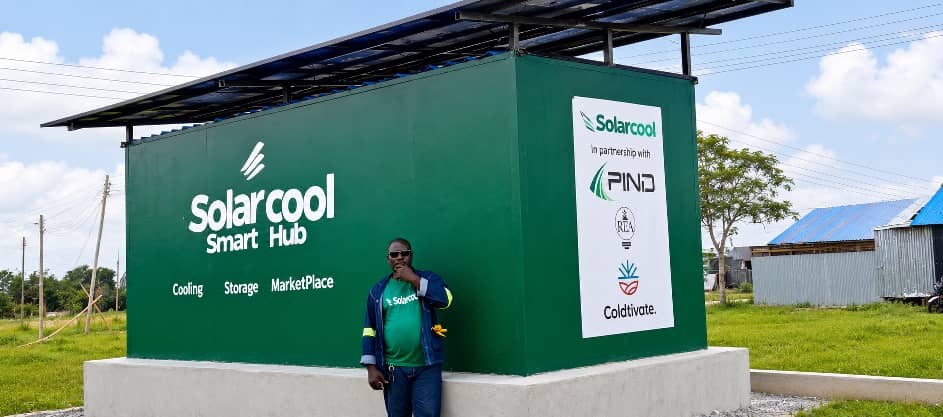
Because when the next blackout happens, you shouldn’t have to choose between sitting in the heat and spending money on petrol. At Solarcool, we’re building solar-powered fans and freezers around this reality.
Our goal is simple: give Nigerian homes and businesses a practical way to keep cooling and refrigeration running while reducing dependence on unreliable grid electricity and fuel-powered generators.
Your house may be connected to the grid. Your cooling doesn’t always have to be.