
There is a point during a hot Nigerian afternoon when a fan stops feeling like an appliance and starts feeling like a necessity. You open the windows. Nothing.
You turn the fan towards yourself. It helps for a few minutes. Then the power goes out. For anyone living in Nigeria, this isn’t a particularly unusual experience. But there is a bigger story behind those uncomfortable afternoons.
Nigeria is getting hotter, and the need for cooling is growing at the same time that reliable electricity remains a challenge. That creates a problem worth paying attention to.
The demand for cooling is going up
Cooling demand isn’t just about air conditioners. It includes fans, refrigeration, air conditioning and other technologies people use to deal with heat.
And the demand is growing. The International Energy Agency estimates that electricity demand for fans and air conditioning across Africa could quadruple this decade, driven by urbanisation and climate change.
That’s a significant shift. As more people move into cities, homes become more densely populated and temperatures rise, more households will need some form of cooling. The problem is that cooling requires energy.
Nigeria already has a lot of hot days
The World Bank’s climate data shows just how significant the country’s cooling needs already are. Nigeria recorded 6,211 cooling degree days in 2024, a measure used to estimate how much cooling buildings are likely to require when temperatures rise above a comfortable threshold. The same dataset records a heat-index-35 indicator of 44.53 days in 2024.
And this isn’t simply a short-term weather problem. The World Bank estimates that climate change could increase Nigeria’s median and extreme temperatures by around 1°C to 3°C, depending on the region.
So the question isn’t whether Nigerians will need cooling.
It’s how we’re going to power it.
More heat can mean more pressure on the grid
Here’s the uncomfortable part. The hotter it gets, the more people need cooling. The more people use cooling appliances, the more electricity they consume.
And when thousands or millions of households are trying to cool their homes at the same time, electricity demand rises. This is already happening globally. The IEA says cooling demand is increasingly putting pressure on electricity systems, with cooling accounting for around 10% of annual global electricity consumption but about 30% of peak electricity demand.
Africa faces an even bigger challenge because cooling demand is expected to grow rapidly while energy access and grid infrastructure remain uneven. For Nigeria, that creates a difficult equation:
More heat → more cooling → more electricity demand.
But what happens when the electricity isn’t available?
This is where the Nigerian experience becomes different
In countries with highly reliable electricity grids, extreme heat can mean switching on an air conditioner and watching the electricity meter move faster.
In Nigeria, the calculation is different. A blackout can mean sitting through the heat. It can mean starting a generator. It can mean buying more petrol.
Or it can simply mean accepting that the room is going to be uncomfortable. And that’s why the conversation around cooling in Nigeria shouldn’t only be about buying bigger appliances. It should also be about how we power them.
Solar cooling offers another option
Nigeria receives abundant sunlight for much of the year. That makes solar particularly interesting for appliances that are used when the sun is strongest, which, conveniently, is often when the heat is at its worst.
A solar fan can use sunlight to provide ventilation during the hottest part of the day without requiring a generator to be running. For households, that can mean less dependence on the grid. For small businesses, it can mean keeping customers and workers more comfortable.
And because the energy comes from the sun rather than petrol, every hour of cooling doesn’t require another trip to the filling station.
It’s not about abandoning the grid
Solar doesn’t have to mean disconnecting from everything else. For many Nigerian households, the more practical approach is simply to make certain essential appliances less dependent on the grid. Your lights can remain connected. Your television can remain connected.
But perhaps your fan doesn’t have to stop working every time there’s a blackout.
The same thinking applies to refrigeration.
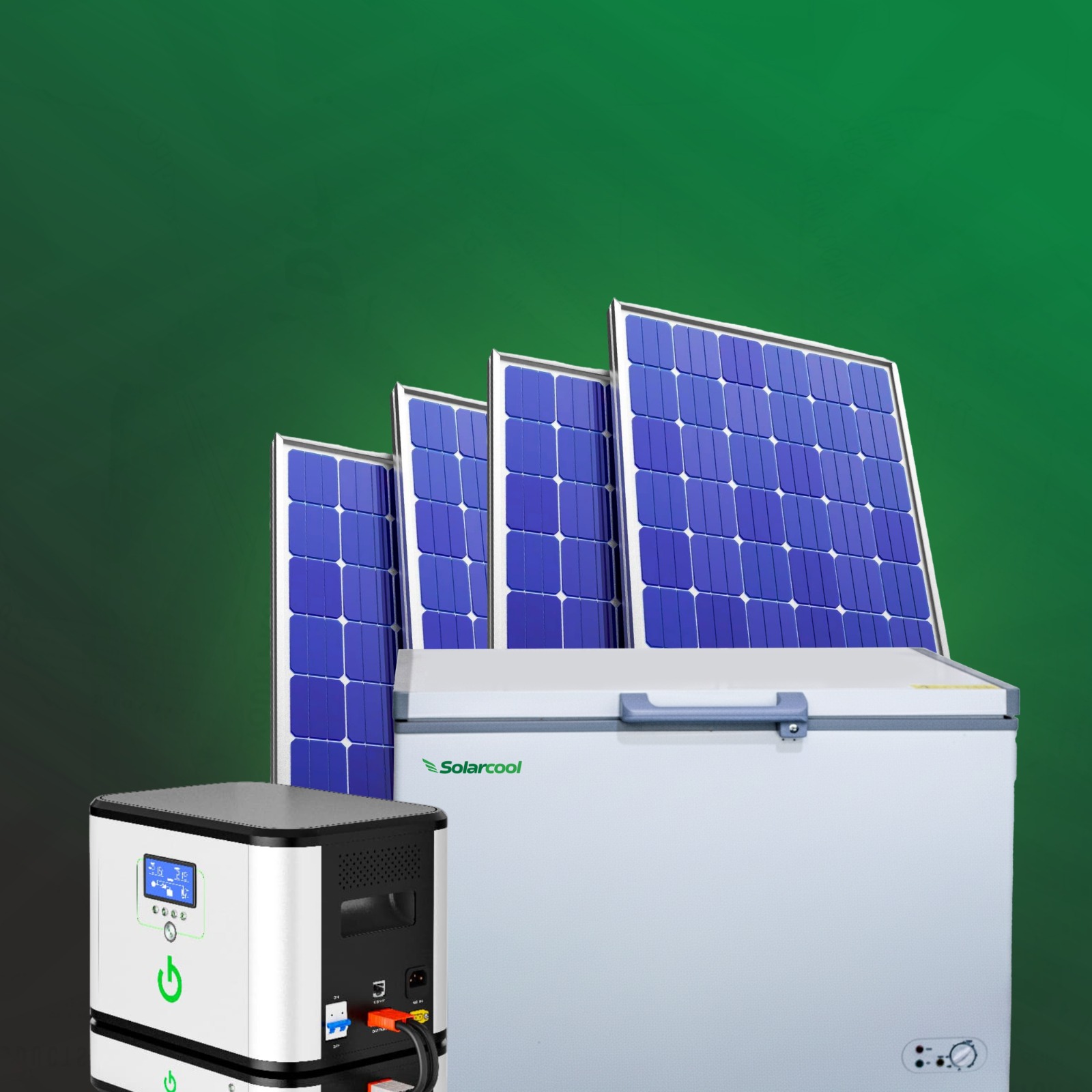
A solar freezer can help protect food and products when grid electricity isn’t available, reducing the need to immediately turn to a fuel-powered generator. It’s a different way of thinking about energy. Instead of asking:
“How can I power everything?”
You start by asking:
“Which things are most important to keep running?”
Cooling is becoming an energy issue, and a household issue
The conversation around climate change can sometimes feel distant. Temperature projections for 2050. Global emissions targets.
International climate conferences. But you don’t need to look that far ahead to see what rising heat means. It’s the person trying to sleep on a hot night. The student studying in a stuffy room. The remote worker trying to concentrate during an afternoon blackout. The shop owner trying to keep customers comfortable.
The family trying to preserve food when the freezer goes off. These are everyday cooling problems. And they’re only going to become more important as temperatures rise.
The future of cooling in Nigeria needs to be smarter
Nigeria doesn’t just need more cooling. It needs cooling that makes sense for the realities of Nigerian households and businesses. That means solutions that are affordable, energy-efficient and capable of working when the grid isn’t.
At Solarcool, that’s the problem we’re trying to solve. Our solar-powered fans and freezers give homes and businesses another way to stay cool and protect what matters without depending entirely on grid electricity or fuel-powered generators.
Because when the sun is responsible for some of Nigeria’s hottest hours, it makes sense to let the sun do some of the work.