
Imagine buying fresh fish at a market in the morning.
By afternoon, it has travelled from a fishing community to a market, changed hands once or twice and perhaps spent hours sitting without proper refrigeration. By the time it reaches someone’s kitchen, the fish has already been through a surprisingly long journey.
And in Nigeria, that journey can be expensive. Not necessarily because the fish itself is expensive, but because keeping it fresh is difficult.
A fish can lose value long before it reaches your plate
A study of fisheries in Ondo State looked at three commonly traded species: croaker, catfish and shrimp. The researchers found average post-harvest losses of 8.15% for croaker, 7.76% for catfish and 7.57% for shrimp among the fishermen surveyed. The causes included poor handling, inadequate storage, lack of ice and transportation problems.
Those percentages might sound small. But imagine a trader buying 100 kg of fish. An 8% loss is roughly 8 kg. That’s fish that can no longer be sold at its original value. And for someone operating on a small margin, that matters.
The problem gets worse when cooling is missing
Fish is highly perishable. The longer it remains exposed to heat without adequate cooling, the more difficult it becomes to maintain its quality. That’s why cold storage matters so much.
A World Bank assessment of Nigeria’s food system highlighted the problem around highly perishable products such as catfish and tomatoes. It found that inadequate cold-chain infrastructure contributed to losses and noted that, outside Lagos State, wholesalers and retailers handling fresh catfish often had to sell it within a very short period because of limited cold storage.
In other words, the market isn’t always determining when the fish gets sold. The fish is determining how long the seller has to find a buyer. That’s a very different business.
Think about what that does to the price
Suppose you’re a fish seller. You buy 100 kg from a supplier. If you have dependable refrigeration, you have more flexibility. You can hold some stock.
You can wait for better demand. You can potentially sell to customers who aren’t arriving at the exact moment the fish reaches the market. Without reliable cooling, your options shrink. You need to move the product quickly.
And if demand isn’t there, you may have to reduce the price. Or accept the loss. So cold storage isn’t simply about preserving food. It’s about giving the seller more control over time.
Nigeria has seen this problem before
This isn’t a new problem. A study of the Kainji Lake fishery involving 665 respondents across 45 fishing villages and collection centres estimated that about 1,000 tonnes of fish were lost or lost value through spoilage in 1995.
The estimated economic loss at the prices used in that study was ₦80 million annually. Obviously, those naira figures cannot be compared directly with today’s prices. But the underlying problem is still recognisable.
When food is perishable and cooling is unreliable, value disappears between the point of production and the point of consumption.
And this isn’t only a fishing problem
The same principle applies to plenty of Nigerian businesses. A frozen-food seller. A small restaurant. A meat trader. A supermarket. A farmer selling produce. A household buying food for the week.
All of them have something in common:
They need time. Time to sell. Time to transport. Time to cook. Time to decide what to do with food that wasn’t eaten today. Reliable cooling gives them some of that time back.
Solar is making that conversation more interesting
Traditionally, refrigeration in places with unreliable electricity has meant one of two things: Use the grid when it’s available. Or start the generator when it isn’t. But that creates another problem. If the business is in a location with weak electricity infrastructure, keeping a freezer running can become an expensive daily exercise.
In 2025, the FAO published a dedicated guide on solar energy and cold chains for small-scale fisheries, highlighting solar-powered refrigeration and ice-making as technologies that can help reduce food losses, improve fish quality and create new market opportunities. (FAOHome)
That’s significant because it shifts the conversation. Solar isn’t simply a way of generating electricity. For businesses dealing with perishable products, it can become part of the food preservation infrastructure.
What would happen if sellers had more control over their stock?
A fish trader wouldn’t have to rush every sale simply because the sun is beating down.
A frozen-food seller could keep products cold during an outage.
A small restaurant could store ingredients with greater confidence.
A household could buy food for several days instead of constantly worrying about whether the next blackout will ruin it.
The benefit isn’t simply colder food.
It’s more options.
The cold chain starts much closer to home than we think
When we hear “cold chain”, it’s easy to picture huge warehouses, refrigerated trucks and industrial food companies. But the cold chain also includes the small freezer at the back of a shop.
The trader’s storage unit. The restaurant’s freezer. The equipment keeping food safe overnight. These smaller points matter because a food supply chain is only as strong as its weakest links.
If food arrives at a market in good condition but cannot be kept cold afterwards, part of that value is still at risk.
Cooling can protect more than food
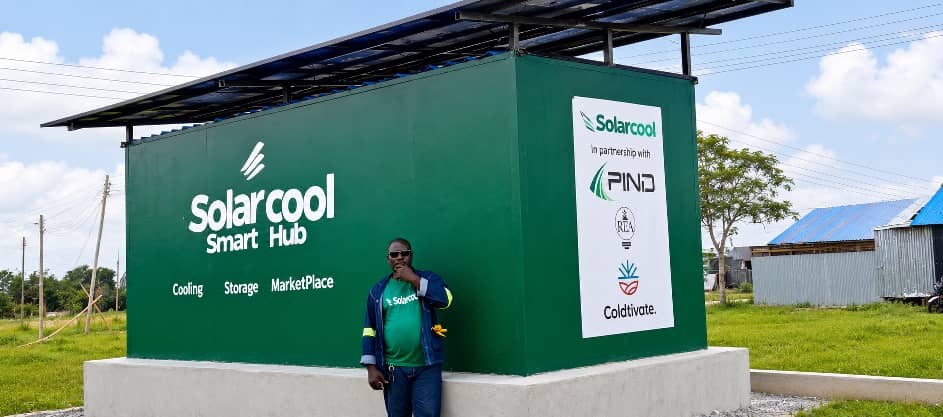
This is why Solarcool looks at cooling differently. A solar freezer isn’t simply another appliance. For the right business, it can be a way to protect inventory, reduce dependence on fuel and give the owner more control over when products need to be sold.
And for households, reliable cooling can mean fewer worries about losing food during power outages. Nigeria doesn’t necessarily need to produce more food just to compensate for everything that gets lost along the way.
Sometimes, we need to get better at keeping what we already have. At Solarcool, we’re working towards that with solar-powered cooling solutions built for Nigerian homes and businesses.