
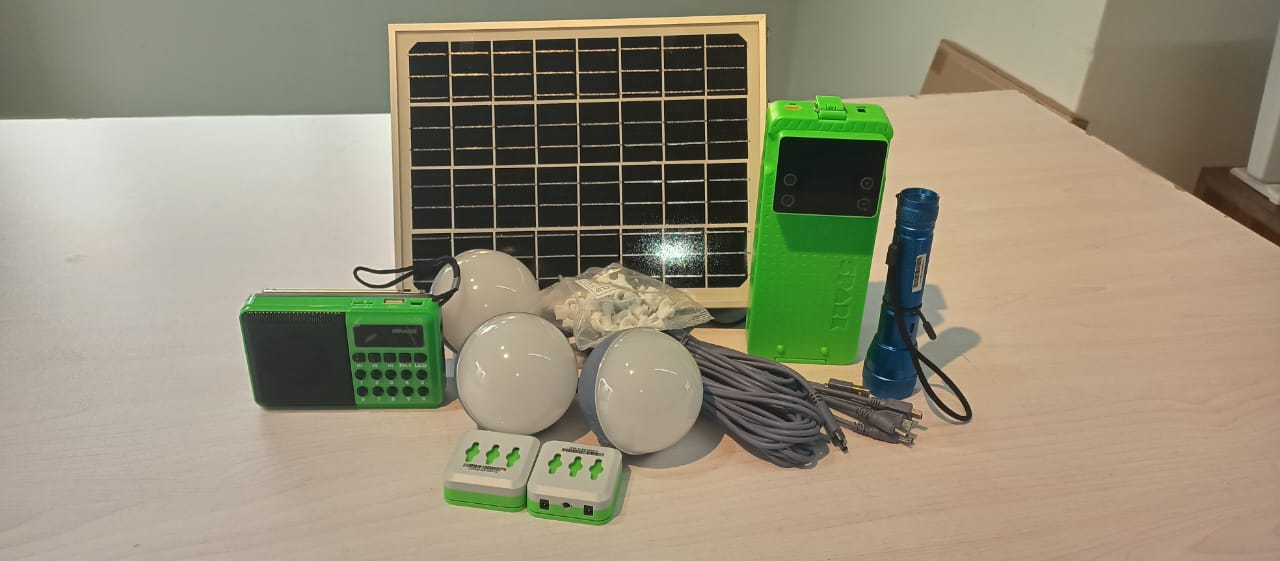
I was sitting in my office on Tuesday afternoon, watching a colleague frantically move a carton of perishables from our main fridge to a smaller backup unit because the power had been out for the fourth time that day. As the generator roared to life outside, filling the room with that familiar, choking exhaust smell, I realized something: we aren’t just paying for electricity. We’re paying a “generator tax” on our sanity.
In Nigeria, we talk about the “National Grid” like it’s a living thing that’s constantly failing us. But when you look at the data, the scale of that failure is staggering.
With over 200 million people relying on a grid that struggles to sustain 5,000 MW of power, we are effectively living in an energy drought. If you look at the numbers from the Nigerian Independent System Operator (NISO), we’ve already seen at least three total system collapses this year. That’s not just a headline. That’s hundreds of thousands of small businesses, people like us, losing inventory, losing hours, and most importantly, losing the ability to plan.
The Math Behind the Exhaust Fumes
I’ve been tracking our own numbers at Solarcool, and the data is brutal. For the average small business or household in 2026, the cost of running a generator, fuel, oil changes, and constant repairs is easily hitting between ₦300,000 and ₦600,000 a month depending on the load.
Do the math: over three years, you are pouring nearly ₦15 million into the air.
Think about what that money could have done. That’s capital for expansion, that’s a new product line, that’s a child’s school fees. Instead, it’s being fed into a machine that depretiates the moment you turn it on. It’s an “empty” investment. You spend it, and at the end of the month, you have nothing to show for it but a noisy, dirty machine that might break down anyway.
A Different Kind of ROI
When we talk about solar at Solarcool, I try not to talk about “saving the planet.” Most of us don’t have the luxury of thinking about global climate goals when our immediate goal is keeping the shop open.
I talk about predictability.
Moving to an off-grid solar setup isn’t about being an environmentalist; it’s about asset management. When you install a solar freezer or a cooling unit, you are making a capital investment. You are buying an asset that generates its own “fuel” for free every single day for the next decade.
Sure, the initial cost is higher than buying a petrol generator. But in 2026, the break-even point for a well-sized solar cooling system is arriving faster than ever, often in under 3 years. After that, your energy cost is essentially zero.
Moving Beyond the “Survival” Mindset
I’m tired of the “grid-watch.” I’m tired of the anxiety that comes with every dip in the lights. For a long time, we were told that solar was “too expensive” or “too complicated.” But the technology has caught up to our reality. We’re using high-efficiency cooling units that act like thermal batteries; they keep your food frozen and your space cool even after the sun goes down, without needing a massive, expensive bank of batteries that you have to replace every two years.
We have to stop viewing off-grid technology as a “luxury” for the elite. In Nigeria, off-grid cooling is the most practical, logical, and financially sound decision a business owner can make to protect their revenue. The grid is a lottery. The sun is a constant. It’s time we stopped playing the game and started building our own infrastructure.