
There is a particular kind of frustration that comes with opening your freezer after a long power outage. You already know what you’re going to find.
The food isn’t as cold as it should be. Something has started to thaw. You start wondering how long the power was actually out, and whether everything inside is still worth keeping.
For many Nigerian households, this is more than an inconvenience. At a time when food prices are already putting pressure on household budgets, losing food because of unreliable electricity can make an expensive grocery shop even more expensive.
And the numbers show just how important food preservation has become.
Nigeria already has a food security problem
In March 2025, the Nigerian government, FAO and other food-security partners reported that 30.6 million people across 26 states and the FCT were projected to face acute food and nutrition insecurity during the June–August 2025 lean season.
That makes reducing food losses particularly important. If food is already expensive to buy, losing some of it before it can be eaten is an even bigger problem. And food doesn’t only get lost on farms or during transportation. Storage matters too.
A freezer can do more than keep yesterday’s leftovers
For many households, a freezer is where frozen food goes. But reliable refrigeration gives people more flexibility over how they shop. You can buy food when prices are favourable. You can prepare meals ahead of time.
You can store meat, fish and other perishables for longer. And you don’t have to make a trip to the market every time you need something for dinner. That flexibility becomes particularly valuable when food prices are rising. The challenge is making sure the freezer actually stays cold.
The electricity problem makes storage harder
Nigeria’s electricity supply has improved in some areas, but reliability remains a challenge. NERC’s current service-based tariff system recognises different supply bands, ranging from a minimum of 4 hours of supply per day for Band E to 20 hours for Band A.
NERC also continues to report issues affecting electricity reliability, including inadequate generation, overloaded infrastructure, faults on transmission and distribution networks, vandalism and extreme weather. That means households cannot always assume that the grid will be available when their refrigerator or freezer needs it. And when cooling disappears, food storage becomes a race against time.
This is why cold storage matters beyond the home
The problem becomes even bigger when you look at the wider food system. The Food and Agriculture Organization says fragile post-harvest infrastructure, limited cold chains and inadequate storage contribute to significant food losses across sub-Saharan Africa.
The organisation specifically identifies solar-powered cold storage as one of the practical technologies that can help reduce these losses. In other words, cooling isn’t simply about making food colder.
It’s part of the infrastructure that helps food survive the journey from producer to consumer.
Solar cooling changes the equation
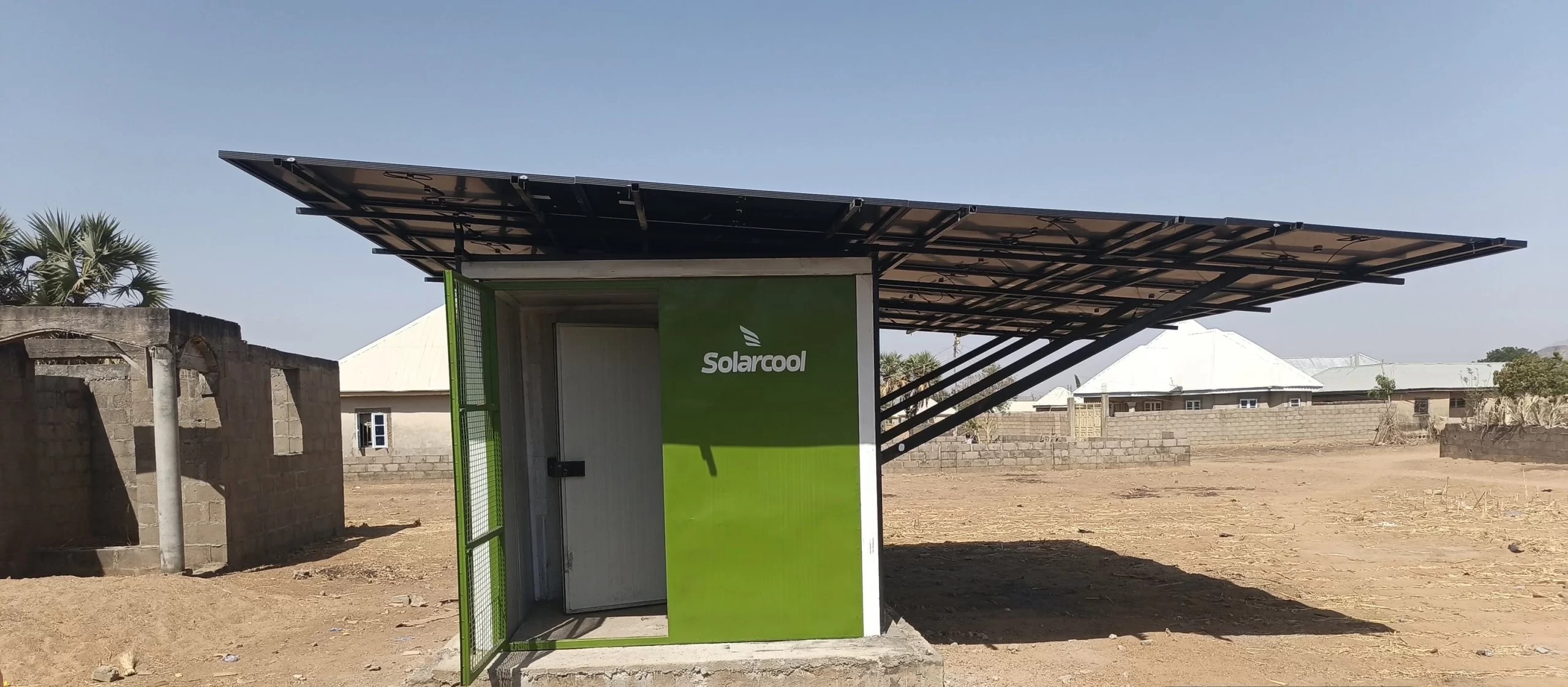
The obvious alternative to unreliable grid electricity is often a generator. But using a generator every time you need to keep a freezer running comes with its own costs. Solar-powered cooling offers another approach. Instead of depending entirely on the grid or running a generator whenever electricity disappears, a solar freezer can use energy from the sun to provide refrigeration.
For households, that can mean greater confidence that the food in the freezer will remain protected during outages. For small businesses, it can mean being able to store more products without making electricity availability the deciding factor. And for anyone who has ever watched expensive food thaw during a blackout, that reliability can be worth a lot.
Nigeria doesn’t need more food going to waste
The food-security conversation often focuses on producing more food. That’s important. But keeping more of the food we already produce is just as important.
FAO notes that investment in cold-chain infrastructure can improve food availability and quality while reducing food loss. It also highlights evidence from Northern Nigeria where solar-powered cold storage improved the volume of produce sold and the profits of users while reducing losses before sale.
That’s an important distinction. Sometimes the solution isn’t simply producing more.
It’s making sure what we already have doesn’t get lost.
Cooling should not depend entirely on the grid
For Nigerian households and businesses, reliable cooling is becoming less of a luxury and more of a practical necessity.
Whether you’re trying to preserve the food you bought at the market, run a small frozen-food business or simply avoid losing groceries during the next blackout, having a dependable source of cooling can make a real difference.
That’s where solar comes in.
At Solarcool, we make solar-powered cooling solutions designed to help homes and businesses stay cool and keep food preserved without depending entirely on the electricity grid.