
Every morning, Adeola arrives at Enugu Market with 50kg of fresh fish. By evening, if she’s unlucky, 15–20kg is spoiled. That’s ₦5,000–10,000 lost—money she needed to buy tomorrow’s stock, feed her family, pay her daughter’s school fees.
This isn’t an isolated story. Across Nigeria, 40% of perishable goods spoil before reaching consumers. In some regions, it’s worse. Farmers and traders lose hundreds of billions of naira annually to a problem that shouldn’t exist in 2026: unreliable cold storage.
The barriers are simple but brutal:
- Individual freezers cost ₦2–8 million upfront (most traders’ entire annual profit)
- Grid electricity is unreliable; diesel generators cost ₦500K–₦1M monthly to run
- Existing shared cold storage demands ₦200K–500K upfront payments that don’t align with daily cash flow
- Traders operate on slim margins—any large upfront cost is impossible
So equipment sits idle in warehouses while traders accept preventable losses as normal.
Until now.
The Problem That Kept Growing
Three years ago, Solarcool’s founder Edeh Christopher saw this exact problem. He’d spent 8+ years in the energy sector across Nigeria, Rwanda, and South Africa, watching brilliant people solve energy poverty with solar. But energy alone wasn’t enough—traders needed cold storage and reliable power.
Most solutions addressed one or the other. Solar companies built solar systems. Cold storage companies rented expensive freezers. Nobody integrated them. Nobody thought about the informal trader paying cash daily.
So Edeh asked a different question: What if we made cold storage accessible the same way people access electricity and mobile minutes—pay for what you use, when you use it?
That question became Solarcool.
The Solution: Solar Cold Rooms + Pay-As-You-Go
Solarcool deploys solar-powered cold rooms in markets and charges traders ₦500–1,500 per day for access. That’s it. No ₦2–8M upfront. No ₦200K monthly contracts. Just pay daily, like you do with electricity.
Here’s what that looks like in practice:
Traditional cold storage model:
- Trader needs ₦2–8M capital
- Can’t afford it
- Goods spoil
- Loses ₦5K–10K daily anyway
- Never recovers
Solarcool PAYG model:
- Trader pays ₦1,000/day to store perishables
- Reduces spoilage from 40% to 5%
- Keeps ₦4K–8K daily (instead of losing it)
- Breaks even in 1–2 weeks
- Profitable forever after
The math is straightforward. The barrier was always the upfront cost, not the value.
How It Works
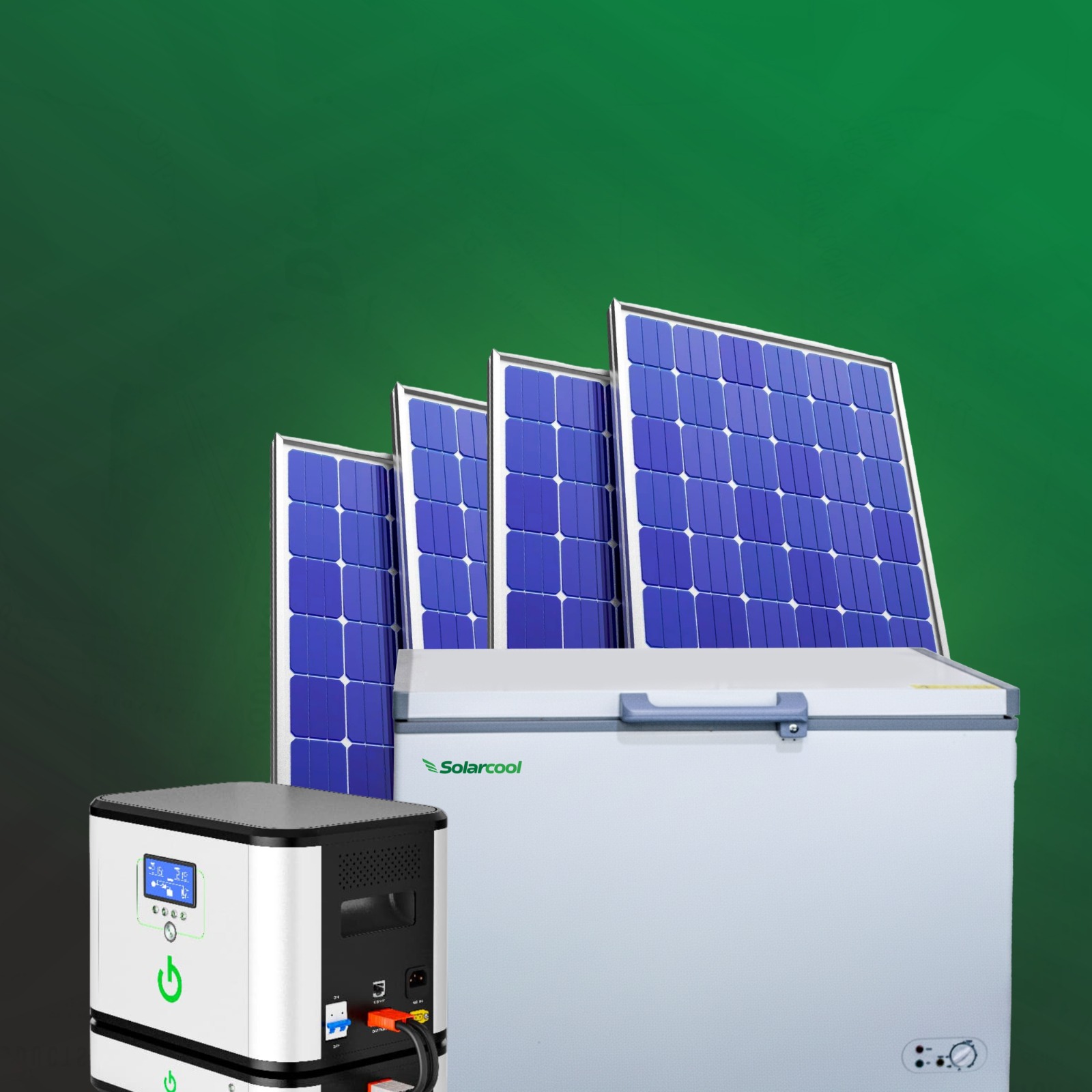
- Solar power: Each unit runs on a 10kW solar array + battery system. Works 24/7, even during blackouts. No diesel, no grid dependence.
- IoT monitoring: Real-time temperature tracking ensures food stays fresh. Predictive maintenance alerts catch problems before they become failures (preventing ₦500K+ losses from equipment breakdown).
- Daily access: Traders use a PIN or app to access the cold room. Load in perishables. Retrieve them throughout the day. Pay the next morning via mobile money (M-Pesa, MTN, Airtel, any provider).
- Transparent pricing: ₦500–1,500/day depending on shelf space. What you see is what you pay. No hidden fees, no surprises.
The Impact We’re Seeing
Solarcool has deployed 5 units across Nigeria (Enugu, Delta, Ogun, Bauchi). The results are consistent:
Spoilage Reduction: 40% → 5% Traders go from losing 2–4 crates daily to losing nearly zero. That’s a 30–35% income improvement—life-changing money.
Payment Reliability: 93% on-time rate People assume informal traders don’t pay on time. Wrong. When the value is clear (traders literally make more money using Solarcool), they prioritize payment. 93% on-time is better than most formal businesses.
Unit Economics: 19–27% IRR This isn’t charity. The model is financially sustainable. By year 3, each unit is generating consistent profit that funds expansion to new markets.
Why This Matters for Africa
Africa needs ₦190 billion annually in climate finance to meet its development goals. Most of that goes to large-scale projects—power plants, industrial agriculture. But 250+ million small traders and farmers operate outside formal finance. They’re invisible to traditional capital.
Solarcool is building the bridge. By making cold storage affordable, we’re:
- Reducing food loss (aligns with UN SDG 12.3: halve per capita global food waste)
- Enabling food security (250K+ farmers/traders by 2034 means millions of people with more stable income)
- Cutting carbon (solar replaces diesel; 60–70% energy cost reduction)
- Creating income stability (traders go from unpredictable losses to predictable profit)
This isn’t just a business. It’s infrastructure for food systems that work.
The Broader Vision
Today: 5 units in Nigeria. 2026: 50+ units across 5 West African countries. 2034: 500+ units serving 250,000+ farmers and traders. ₦50B+ in cumulative food loss prevented.
We’re just getting started. And we can’t do it alone.
Ready to Join Us?
If you’re a trader, farmer, or market association looking to eliminate spoilage and stabilize your income, Shop Now to reserve a cold room in your market.
If you’re an investor, climate-tech enthusiast, or partner organization, Get In Touch to discuss how we can bring Solarcool to your region.
The cold chain should work for everyone. Not just the wealthy. Not just the formal sector. Everyone.
What’s Next?
Solarcool is growing fast. We’ve already secured ₦307.9M in revenue (2024), won a CLASP LEAP Award for innovation, and received grants from the African Development Bank.
We’re looking for:
- Market associations ready to deploy units in your community
- Farmers and traders tired of losing money to spoilage
- Partners who believe cold storage is a climate + food security solution
- Investors ready to fund the next 50 units
Shop Now to get on our waiting list or Contact Us to discuss partnerships.
About Solarcool
Solarcool Smart Hub Ltd is building sustainable cold chain solutions for Africa’s informal food sector. Founded in 2021, we’ve deployed 5 solar-powered cold rooms across Nigeria, reaching 500+ daily users and preventing ₦50M+ in annual food loss. Our mission: make reliable, affordable cold storage accessible to everyone.
Learn more at www.solarcool.com.ng
#ColdChain #FoodSecurity #ClimateAction #SolarEnergy #Africa #Sustainability