
Walk into an appliance shop in Nigeria, and there is a good chance the first thing you will ask about a freezer is:
“How much?” Fair question. With the price of almost everything going up, nobody wants to spend more than they need to.
But there is a problem with looking at the price tag alone. A freezer is not something you buy once and forget about. It will consume energy every day. And depending on how efficient it is, two freezers that look almost identical can have very different running costs over time. That is why the most important number on a freezer may not be the one on the price tag.
Nigeria is about to make this easier to see
The Standards Organisation of Nigeria is introducing its Mandatory Energy Labelling Scheme, which covers refrigerators, freezers and refrigerator-freezer combinations. Under the scheme, appliances will carry energy-efficiency information designed to help consumers compare how efficiently they use energy.
For refrigerators, the system ranges from one star to five stars, with five stars representing the most efficient class. Full mandatory enforcement for Phase I appliances, including refrigerators and freezers, is scheduled for December 2026. That could change the way Nigerians shop for cooling appliances.
Instead of asking only:
“Which one is cheaper?” You can start asking:
“Which one will cost me less to operate?” That is a much more useful question.
The appliance itself can become part of your electricity bill
This matters because cooling is already a significant part of electricity demand. A 2026 study of households in Maiduguri found that refrigerators accounted for 14.74% of the electricity demand recorded in the study, while air conditioners and ceiling fans accounted for another 9.14% and 8.22%, respectively.
The study was conducted in one city, so it shouldn’t be treated as a picture of every Nigerian household. But it illustrates something important. Cooling appliances can consume a meaningful amount of electricity. And a freezer doesn’t care whether your electricity is coming from the grid, an inverter, a generator or solar. It still needs energy. Which means efficiency matters regardless of how you power it.
This becomes even more important with solar
There is an interesting connection here. When you run an inefficient freezer on a solar system, you don’t simply use more electricity. You may need more solar panels, more battery capacity or a larger overall system to provide that electricity.
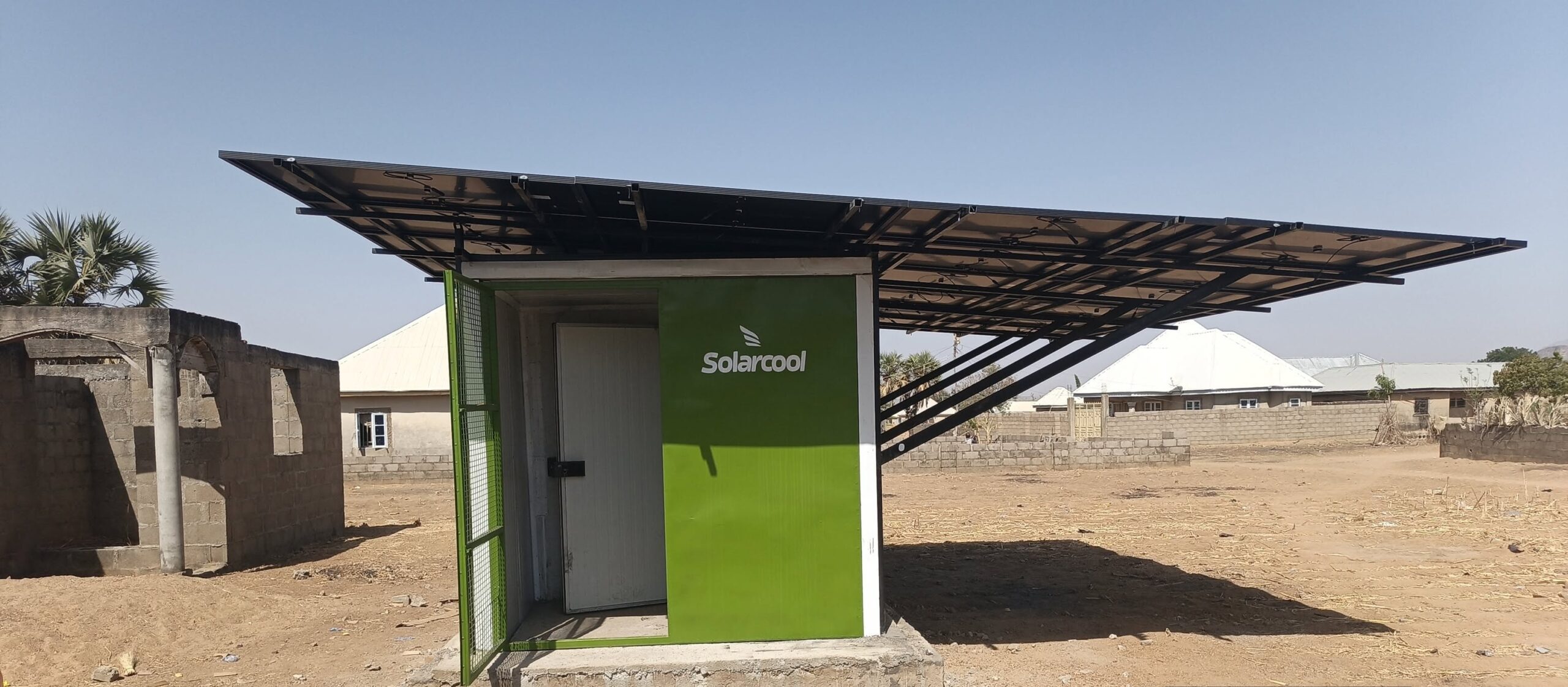
In other words, an inefficient appliance can make your entire energy system more expensive. This is one reason appliance efficiency and solar adoption should not be treated as two completely separate conversations. The less energy your cooling equipment needs, the easier it becomes to design a system around it. Nigeria’s own Productive Use of Energy programme recognises solar cooling as a productive technology, with solar freezers and solar cold rooms among the equipment eligible under its standalone solar programme.
So what should you actually check before buying?
Price is still important. Capacity matters too. But there are a few other questions worth asking.
1. How energy efficient is it?
Don’t stop at the manufacturer’s marketing claim. Look for the official energy-efficiency information and compare models. The new Nigerian labelling system is designed specifically to make this comparison easier.
2. How much cooling do you actually need?
Buying a massive freezer because it is available can be a mistake. If you’re a small retailer, you may not need the same capacity as a supermarket. The goal is not to buy the biggest appliance. It is to buy one that matches the business.
3. What will power it?
This question becomes particularly important if you’re considering solar. A freezer that works well on a solar system needs to be properly matched with the panels, battery, inverter and expected usage.
4. What happens when the electricity goes off?
This is where the design of the cooling system matters. How well does it retain cold? How frequently does the compressor need to run? How much energy does it need during normal operation?
These details can matter more over several years than a small difference in the original purchase price.
The real price of a freezer comes later
Imagine two businesses. Both buy freezers for roughly the same amount. One chooses a more efficient model. The other chooses an appliance because it was cheaper on the day. They both open their businesses the next morning.
Then the electricity bills start arriving. Then the generator starts running. Then fuel is purchased. Then batteries are charged. Then solar capacity has to be considered. This is when the original price starts to tell only half the story.
The other half is the cost of keeping the appliance running. And that is something Nigerian consumers are going to have to think about more as energy efficiency becomes a bigger part of the appliance market.
Maybe we need to stop asking what appliances cost
We should ask what they cost to own. That is a subtle but important difference. A freezer is not simply a box that keeps food cold. It is an energy-consuming machine that could remain in your home or business for years. The same thinking applies to solar cooling.
The best system isn’t necessarily the one with the biggest battery or the most impressive specifications. It is the one designed around what you actually need to cool, how often you need to cool it and how efficiently the system can do the job.
Because in Nigeria, where every unit of energy matters, buying the right cooling equipment can be an energy decision as much as an appliance decision. And sometimes, spending a little more upfront can make more sense than spending a little less every day afterwards.